News Details
- admin
- 0 Comments
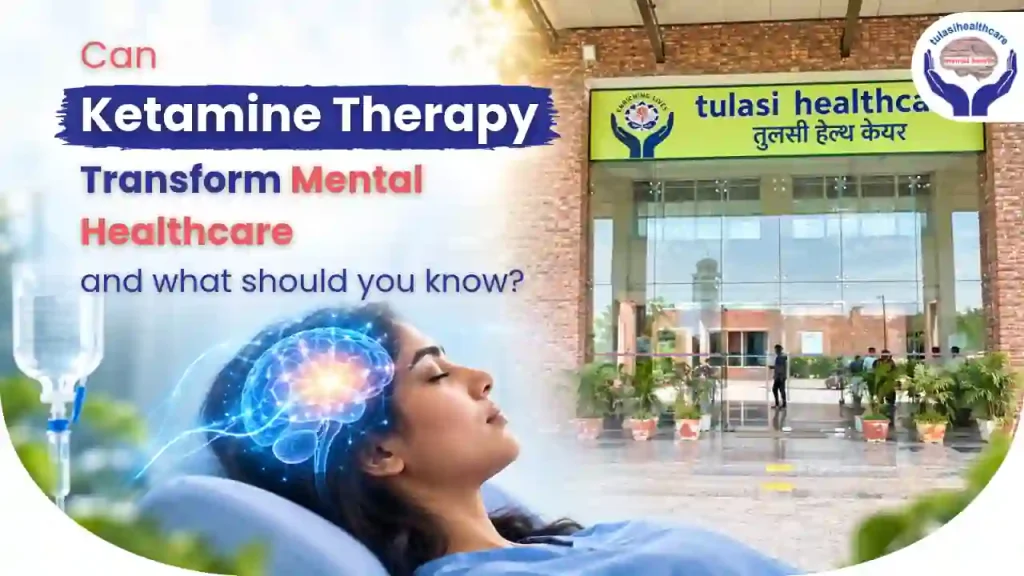
Can Ketamine Therapy Transform Mental Healthcare and What should You Know?
Ketamine Therapy: A New Approach to Mental Health Treatment
It has been a long time since psychiatric ailments have since started not responding to traditional medicine and antidepressants. People have been facing concerns on how they can get their elements treated while still maintaining lower dependence on medication. This is where ketamine enters the conversation as a solution.
It was originally an FDA approved anesthetic, and now it has been working as a repurposed, psychiatric medicine in lower and control doses. While some people in the field are still torn on its applicability, we at Tulasi Healthcare discuss it openly as an option while people come to consult with a psychiatrist in Delhi to explore it.
What is Ketamine Therapy?
Ketamine is available in its two clinical forms, – IV ketamine infusion (off label use) and esketamine nasal spray. Since it is a very controlled and minimum use drug, it is administered very discreetly in a clinical and hospital setting only and requires a vital monitoring throughout the whole session.
It is typically administered within some series of sessions and it is definitely not a one-time fix. It often takes over six infusions, which will be considered over 2 to 3 weeks initially.
How does it Work on the Brain?
Ketamine usually takes effect on the glutamate/NMDA receptor system, where it triggers rapid synaptogenesis.
This in general means that it really regrows the neural pathways and connections which were damaged by the chronic stress and depression, not being able to be repaired by the general antidepressants and antipsychotics, which were administered for initial treatment.
This mechanism explains why it is a stand out – because symptom relief is within hours today versus The 4 to 6 week period which is required for standard antidepressants.
Conditions It can Help with
There are different kinds of conditions ketamine therapy can help with. Let’s take a look at some of these.
- – Treatment resistant Depression: Some of the best psychiatrist in Delhi will consider this approach if they feel that 2+ fail, standard medication have not had any kind of effect on the patient.
- – Major Depressive Disorder: In case of active suicidal ideation, it is applied in ER in crisis scenarios, where rapid stabilisation is necessary.
- – PTSD: This therapy is particularly applied in cases where trauma response has not improved with therapy itself and active medications have also not helped.
- – OCD: There is still limited application for this therapy here, but there is evidence for chronic pain linked depression, and OCD being discovered.
What Makes Ketamine Therapy Different from Traditional Medicines?
- – Speed: it has a high rate of effectiveness and shows within hours versus weeks. This proves to be critical in many suicide linked cases.
- – Mechanism: Bypasses the serotonin pathway entirely and is used when SSRIs and SNRIs have failed.
- – Not meant for long-term use: It is usually used as a bridge therapy alongside predecided therapy and medication.
- – It requires in clinic administration, unlike take- home oral medications.
Is it Safe? What to Expect?
Usually, it is safe in many specs when given under controlled circumstances.
Some of the things to keep in mind include –
- – Common short-term effects are: dissociation, elevated blood pressure, nausea, dizziness.
- – It is not recommended for patients who have a problem of uncontrolled hypertension, history of psychosis or heart conditions.
- – It cannot be applied as a walk-in option because it requires a pre-psychiatric treatment evaluation.
- – There is a risk of misuse or dependency if it is applied outside of a clinical setting and that is why reinforcing it with a licensed psychiatrist in Delhi is expected. They should be the ones overseen treatment for a proper application.
Growing Conversation around Ketamine in India
Indian psychiatry is growing around Ketamine and it is increasingly being adopted in Metro cities and hospitals that are having specialised clinics. The awareness around it is rising because of the global coverage around it and there are some regulations that make it remain limited compared to the US.
It is still not positioned as a first choice treatment, but rather a second line of crisis intervention. This is why approaching a best psychiatrist in Delhi with specific training matters when you are going into ketamine assisted protocols.
It is a Promising Tool, but not a Miracle Cure
Ketamine is a tool that has a broader and personalised treatment plan. It is not a miracle worker or a replacement for any kind of therapy. Setting realistic expectations around it as a psychiatrist in Delhi is a matter of concern – because rapidly does not mean permanent cure if any reader is experiencing and going through treatment resistant symptoms, this can be your sign to consult with a psychiatrist in Delhi to asses if they are a candidate to fit ketamine therapy.
